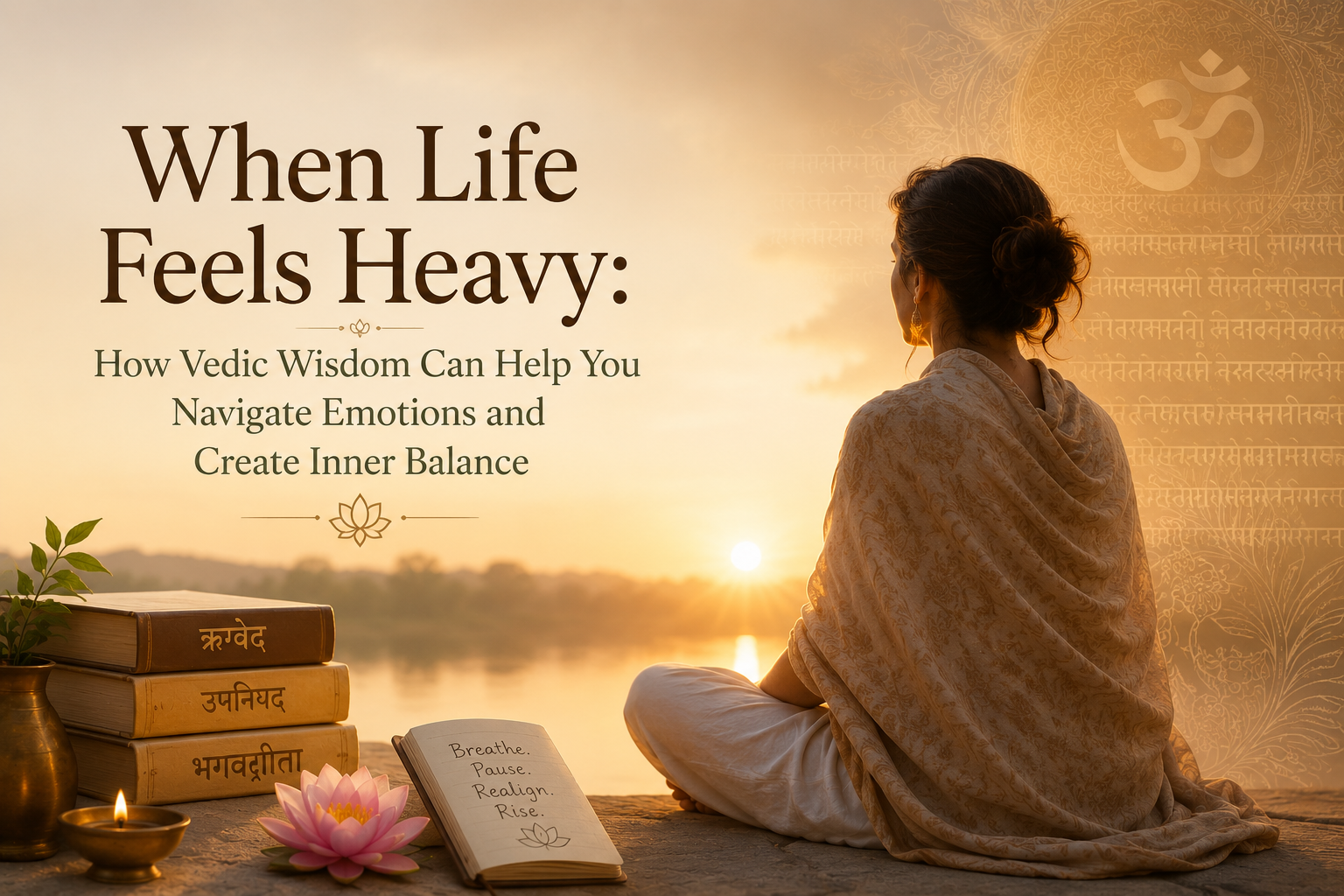
In recent years, terms like emotional energy, mind-body connection, manifestation, and emotional wellbeing have become increasingly popular.
People are beginning to recognize that their thoughts and emotions influence not only how they feel, but also how they show up in relationships, work, health, and everyday life.
Interestingly, this idea is not new.
Thousands of years ago, Vedic wisdom described human wellbeing as more than physical health alone. The Vedic teachings viewed life as an interconnected relationship between the body, mind, emotions, breath, and energy.
This holistic understanding offers valuable insights even today, especially for people navigating stress, uncertainty, emotional overwhelm, and the desire to create a more fulfilling life.
What Is Emotional Energy?
Emotional energy refers to the impact our emotional state has on our thoughts, behaviours, decisions, and overall sense of wellbeing.
Most people have experienced this firsthand.
When feeling peaceful and emotionally balanced, challenges often seem more manageable.
When feeling stressed, anxious, resentful, or emotionally exhausted, even simple tasks can feel overwhelming.
While emotions may seem temporary, their effects often influence:
Focus and productivity
Relationships
Decision-making
Confidence
Motivation
Physical wellbeing
Quality of life
The Vedic sages observed these patterns long before modern discussions around emotional wellbeing became mainstream.
What Does the Vedic System Teach About Emotions?
The Vedic tradition does not separate emotional wellbeing from overall wellbeing.
According to this perspective, human beings function through multiple interconnected dimensions:
The physical body
The mind
The breath
Emotional experiences
Vital life energy
When these aspects work in harmony, people often experience greater:
Clarity
Stability
Resilience
Inner peace
When imbalance persists for long periods, it may manifest as:
Emotional reactivity
Mental restlessness
Chronic stress
Lack of direction
Inner conflict
A sense of disconnection
The Vedic approach encourages individuals to understand their inner state rather than merely reacting to external circumstances.
Why Emotional Energy Matters in Modern Life
Today's world rewards constant activity.
Many people continue functioning despite feeling:
Emotionally drained
Overwhelmed
Disconnected
Unfulfilled
Over time, emotional burdens can affect the way we think, communicate, respond to challenges, and pursue our goals.
The Vedic teachings suggest that external success becomes more sustainable when it is supported by internal balance.
How we feel internally influences how we show up externally.
This principle remains highly relevant for professionals, entrepreneurs, parents, and anyone seeking greater wellbeing between the ages of 25 and 50.
How Can Vedic Wisdom Be Applied in Daily Life?
One reason Vedic wisdom has endured for centuries is its practical application.
Its purpose was never merely philosophical understanding. It was meant to help people live with greater awareness, balance, and purpose.
1. Observe Your Emotional Patterns
Instead of immediately reacting to emotions, learn to notice them.
Ask yourself:
What am I feeling?
What triggered this response?
Is this reaction helping me or limiting me?
This practice develops emotional clarity.
2. Pay Attention to Your Energy
Notice which people, environments, habits, and activities:
Energize you
Drain you
Create calm
Create stress
This awareness helps you make healthier choices.
3. Create Space for Reflection
The Vedic tradition emphasized self-reflection as a path to growth.
Even a few minutes of daily reflection can improve:
Decision-making
Emotional regulation
Self-awareness
Inner stability
4. Align Actions With Values
Inner conflict often arises when actions repeatedly contradict personal values.
Greater alignment between values and actions creates a stronger sense of purpose, fulfilment, and emotional stability.
Emotional Balance and Manifestation
Manifestation is often associated with goals, intentions, and desired outcomes.
However, the Vedic perspective suggests that our inner state matters just as much as our outer action.
When people operate primarily from:
Fear
Stress
Scarcity
Self-doubt
their decisions are often influenced by those emotions.
When people cultivate:
Clarity
Emotional balance
Self-trust
Purpose
they are more likely to make choices that support their desired outcomes.
This is not about magical thinking.
It is about recognising that emotional states influence behaviour, and behaviour influences results.
In that sense, emotional wellbeing becomes an important foundation for creating the life we wish to experience.
Ancient Wisdom for a Modern World
Technology has transformed how we live, work, and connect.
Yet many of the challenges people face today are deeply human:
Stress
Uncertainty
Emotional overwhelm
Relationship struggles
Lack of fulfilment
The Vedic system reminds us that lasting wellbeing is not found solely through external achievement.
It emerges when we learn to understand and care for our inner world as well.
Perhaps that is why these teachings continue to remain relevant after thousands of years.
The quality of our life is influenced not only by what happens around us, but also by what is happening within us.
Frequently Asked Questions
What does the Vedic system say about emotions and energy?
The Vedic system views the body, mind, breath, emotions, and energy as interconnected. According to this perspective, emotional experiences influence our inner state, while our energy affects how we think, feel, respond to challenges, and experience life.
How can I improve my emotional energy in daily life?
Simple practices such as self-reflection, meditation, mindful breathing, spending time in nature, and becoming aware of emotional patterns can help restore balance. The Vedic approach emphasizes managing both emotions and energy rather than ignoring them.
Can emotional imbalance affect the way we experience life?
Yes. When we feel emotionally overwhelmed, drained, or disconnected, it can influence our decisions, relationships, confidence, focus, and overall wellbeing. The Vedic teachings encourage cultivating inner balance so we can respond to life with greater clarity and resilience.
How can Vedic wisdom help with personal growth and manifestation?
Vedic wisdom teaches that our inner state influences our outer experience. By developing emotional awareness, energy balance, self-understanding, and intentional action, individuals are better positioned to make choices that support their goals, relationships, wellbeing, and desired outcomes.
About the Author
Er.Rashmi Khamkar is the Founder of The InnerShift Method™ and creator of the philosophy "Heal First, Manifest Naturally." She is an Emotional Regulation & Manifestation Mentor who has guided clients across the globe in transforming their relationships, wellbeing, career, business, and personal growth.
Her work integrates emotional awareness, subconscious mind programming, energy awareness, and alignment practices to help individuals release limiting patterns, create inner balance, and move toward the life they truly desire.
Rashmi believes that lasting transformation begins within. Through The InnerShift Method™, she helps people heal, grow, and manifest with greater clarity, confidence, and alignment.
Connect with Rashmi through her website or on Instagram: healandmanifestwithrashmi