
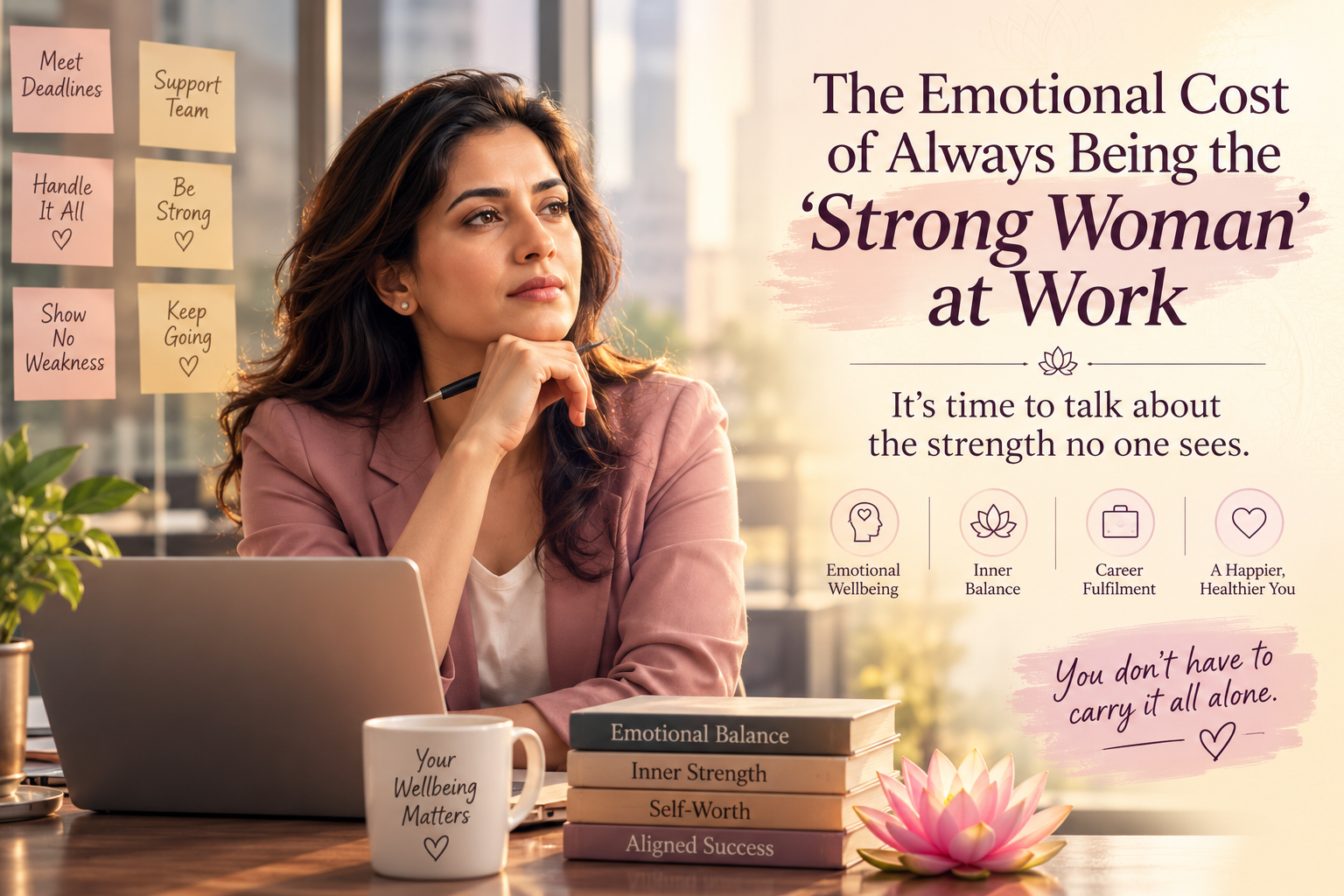
The Emotional Cost of Always Being the 'Strong Woman' at Work
She's the one everyone depends on.
The one who rarely misses a deadline.
The one who solves problems before anyone notices them.
The one who stays calm during uncertainty.
The one who says, "I'll handle it."
From the outside, she appears confident, capable, and in control.
But behind that strength, there is often a quiet emotional cost that few people see.
When Strength Becomes an Identity
Many women don't choose to become "the strong one."
Life slowly assigns them that role.
They become the reliable employee.
The dependable leader.
The supportive colleague.
The daughter who never complains.
The partner who keeps everything together.
Over time, strength stops being something they show.
It becomes someone they believe they have to be.
The Pressure No One Talks About
Being emotionally strong is not the problem.
Feeling that you can never put your guard down is.
Many high-achieving women quietly carry:
- The pressure to always perform.
- The fear of appearing weak.
- The habit of saying "yes" before checking in with themselves.
- The guilt of asking for help.
- The emotional weight of supporting everyone else while neglecting their own needs.
Eventually, this constant emotional load begins to affect more than just work.
It affects confidence, relationships, health, creativity, and the ability to truly enjoy success.
Success Doesn't Always Feel Like Success
Many women reach the career milestones they once dreamed of.
Yet they still feel...
- Constantly exhausted.
- Emotionally disconnected.
- Unable to celebrate their achievements.
- Restless, despite doing well.
This isn't because they lack gratitude.
Sometimes, it's because they've spent so long surviving that they no longer know how to simply experience joy.
Why Emotional Regulation Matters
In my work, I often see women trying to solve emotional exhaustion with better time management, more productivity, or another professional achievement.
But emotional depletion isn't always a productivity problem.
Sometimes it's an emotional regulation problem.
When emotions remain unprocessed for long periods, they influence how we think, communicate, make decisions, and respond to everyday challenges.
The stronger we appear on the outside, the more important it becomes to create space for what is happening within.
Redefining Strength
Perhaps true strength isn't carrying everything alone.
Perhaps true strength is recognising when your mind, body, and energy need your attention too.
Because a woman who feels emotionally balanced doesn't become less successful.
She becomes more present.
More intentional.
More fulfilled.
And most importantly, she no longer measures her worth by how much she can carry.
She allows herself to succeed without carrying the invisible burden of always having to be the strong one.
Frequently Asked Questions
1. Why do many successful women still feel emotionally exhausted?
Success often comes with invisible emotional responsibilities. Many women continuously manage expectations, suppress emotions, support others, and strive to perform at a high level. Over time, this emotional load can lead to exhaustion, even when everything appears successful on the outside.
2. Can emotional patterns affect career growth?
Yes. Emotions influence confidence, communication, decision-making, leadership, and how we respond to opportunities and challenges. Unresolved emotional patterns can quietly shape professional choices, relationships at work, and overall career satisfaction.
3. What is emotional regulation, and why is it important for working women?
Emotional regulation is the ability to understand, process, and respond to emotions in a healthy way rather than reacting automatically. It helps women navigate workplace challenges with greater clarity, resilience, confidence, and inner balance.
4. Can healing emotional patterns help create better career opportunities?
When women develop greater emotional awareness and release limiting patterns, they often make more aligned decisions, communicate more confidently, and pursue opportunities with greater clarity. Emotional wellbeing becomes a strong foundation for sustainable career growth and meaningful success.
About the Author
Er Rashmi Khamkar is the Founder of The InnerShift Method™ and creator of the philosophy "Heal First, Manifest Naturally." She is an Emotional Regulation & Manifestation Mentor who has helped clients across the globe overcome emotional blocks, build healthier relationships, create aligned careers, grow their businesses, and experience meaningful personal transformation.
Through her work, Rashmi combines emotional regulation, subconscious mind programming, energy awareness, and alignment practices to help individuals create lasting inner balance and manifest a life aligned with their true potential.
To connect with Rashmi or learn more about The InnerShift Method™, visit her website or follow her on Instagram: healandmanifestwithrashmi